- DEN Enews
- Posts
- DEN Enews
DEN Enews
World Water Day is Sunday March 22nd

Diocesan Environment Network
March 17, 2026
Do you know how much fresh water exists on our planet? Not as much as you think.
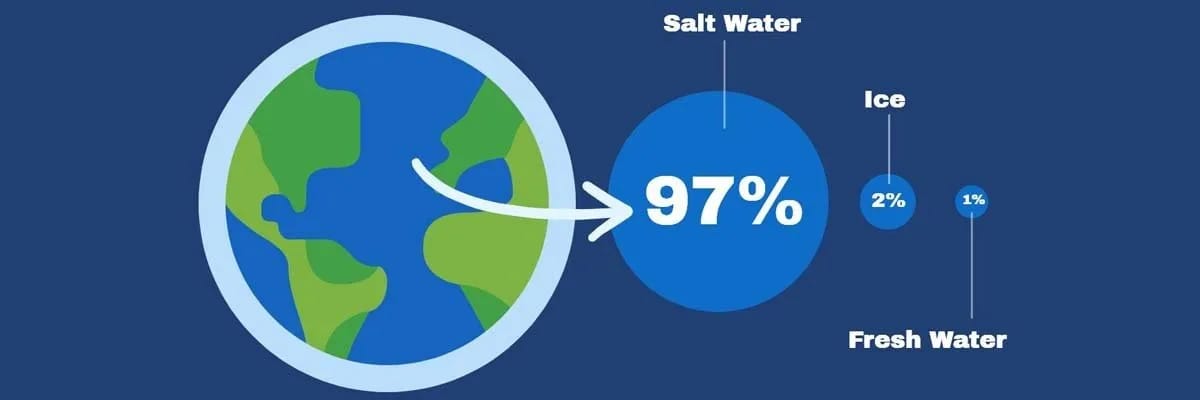
In Katherine Hayhoe’s latest newsletter she cites the UN report that states: “The planet has entered the Global Water Bankruptcy era,” the report stated plainly. “Nearly three-quarters of the world’s population lives in countries classified as water-insecure or critically water insecure. Around 2.2 billion people still lack safely managed drinking water, 3.5 billion lack safely managed sanitation, and about 4 billion experience severe water scarcity for at least one month a year.” For reference, that number represents half the people on the planet.
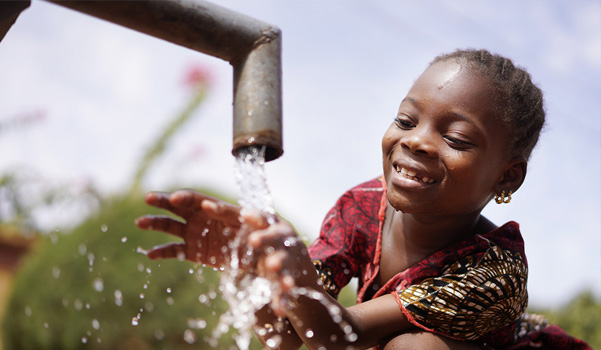
Women and children are the most affected globally by these shortages. That is why the theme for this year’s World Water Day is Water & Gender. Jesse Hamilton sends us this:
The theme for World Water Day 2026 is ‘Water and Gender’ or ‘‘Where water flows, equality grows’. Clean water and sanitation, and gender equality, are 2 of the UNs Sustainable Development Goals that come with many intersections. Globally, more than 1 billion women (more than a quarter of all women) lack access to safely managed drinking water services. This lack impacts education and income, health, safety, and environment. Lifewater Canada is a Canadian charity helping water flow and equality grow for millions in Africa and Haiti. They offer many ways to get involved if this touches your water passion: https://lifewater.ca/
Here are some resources to educate you and assist with advocacy for this precious resource:
From one of our Advocacy Editors: . Each year, this day gives us a chance to recognize and respect how fundamental water is to all life. There are many ways to take part in this global movement, from events, petitions, letter writing, art, water activities, river watching, beach cleaning, learning about water issues, species, or sources near you, and other ideas. If you are looking for a place to start, dive into this water page filled with collected DEN petitions that are all water-related:

Watersheds need our protection.
There is a tour happening in April in cities across New Brunswick called, Downstream: Stories from BC's Mount Polley Mining Disaster 12 Years On. Find a date near you on the link above.
The tour features Nuskmata Jacinda Mack and Bev Sellars of the X’atsull First Nation. They share their first-hand experiences living downstream from the largest tailings dam breach in Canadian history, and how mining in their territory changed their lives, livelihoods, and communities.
The Sisson Mine Project is attempting to happen in New Brunswick under a nation-building initiative. Some of the planning problems include archaic open-pit technology, outdated models of air emissions, a questionable influx of money from the U.S. military, outdated economic feasibility studies, weak environmental laws, and this company not meeting 40 conditions that were attached to the province’s environmental impact assessment approval a decade ago. Arsenic, fine particulate matter, hydrogen sulfide and ammonia are destined to come out of this mine and reach residents, farmers, livestock, air, land, water, and the Nashwaak watershed. Take a moment to learn more here: https://stopsissonmine.ca/
Take action for water, land, and community by signing the letter: https://win.newmode.net/conservationcouncilofnewbrunswick/stopsissonmine
Fresh water is a huge concern but the health of the world’s oceans is critical as well. Our Advocacy Editors invite you to check out these petitions:
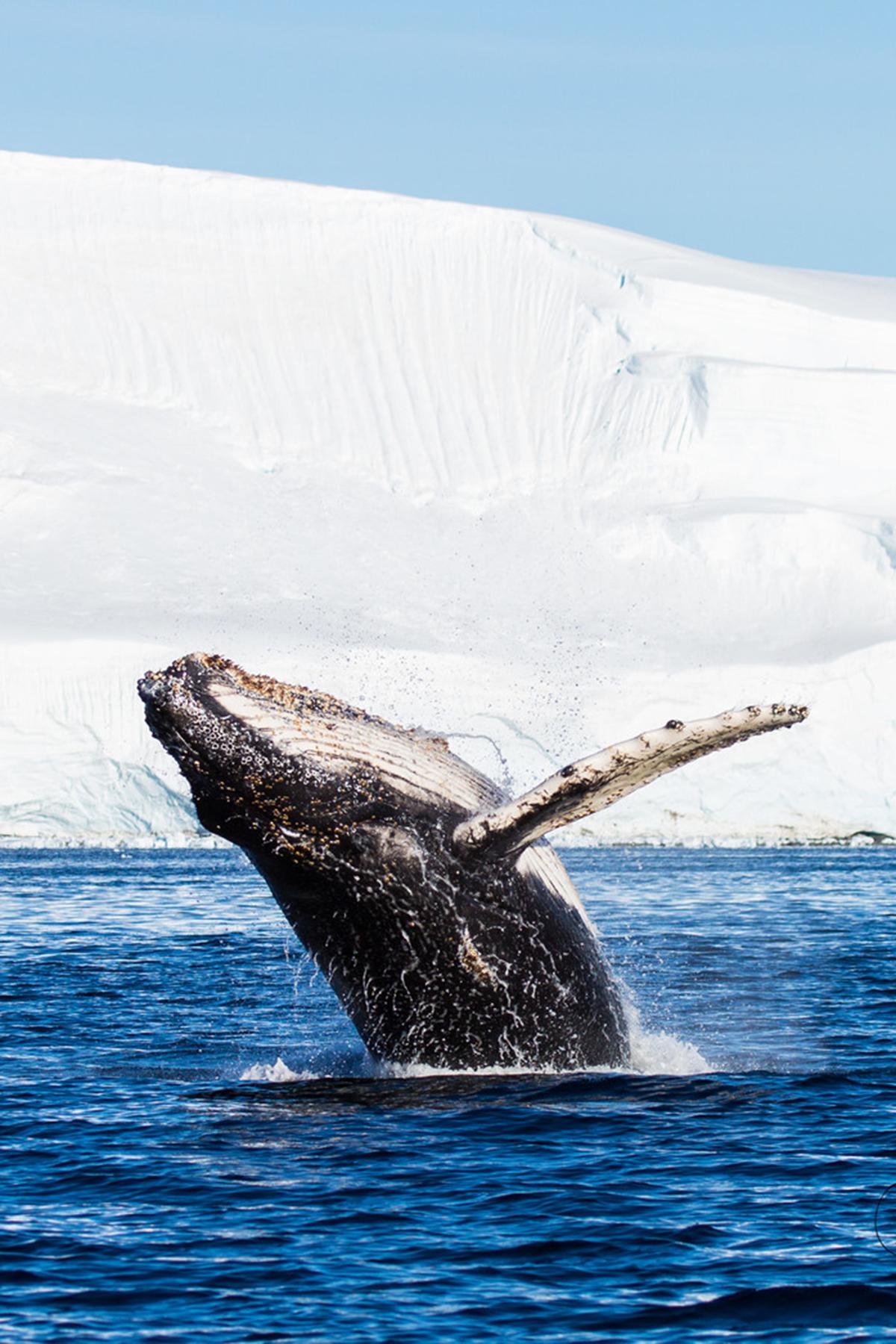
All hands are needed on deck to speak out against seabed mining in Alaskan waters before April 1st. Seabed mining leases on the Alaska Outer Continental Shelf are being considered. The immense risk of long-term damage to Alaskan marine ecosystems from deep-sea mining is too high and far outweighs any tenuous, prospective benefits. The damage is not limited to the U.S. as we all share the oceans and rely on the health of the Arctic. Mining the seabed destroys seafloor habits, which threatens the widespread depletion of deep-sea species, which effects other species and industries like fisheries. Many of the areas being explored for deep-sea mining sales have already been closed to fishing or designated as critical habitats for threatened or endangered species. Canadians can sign this petition from the Ocean Conservatory. It does ask for an address, but putting any letter or number is a way to skip this and still submit the form.
Not a petition for the ocean waters per se but the health of marine life relies on a healthy ocean.
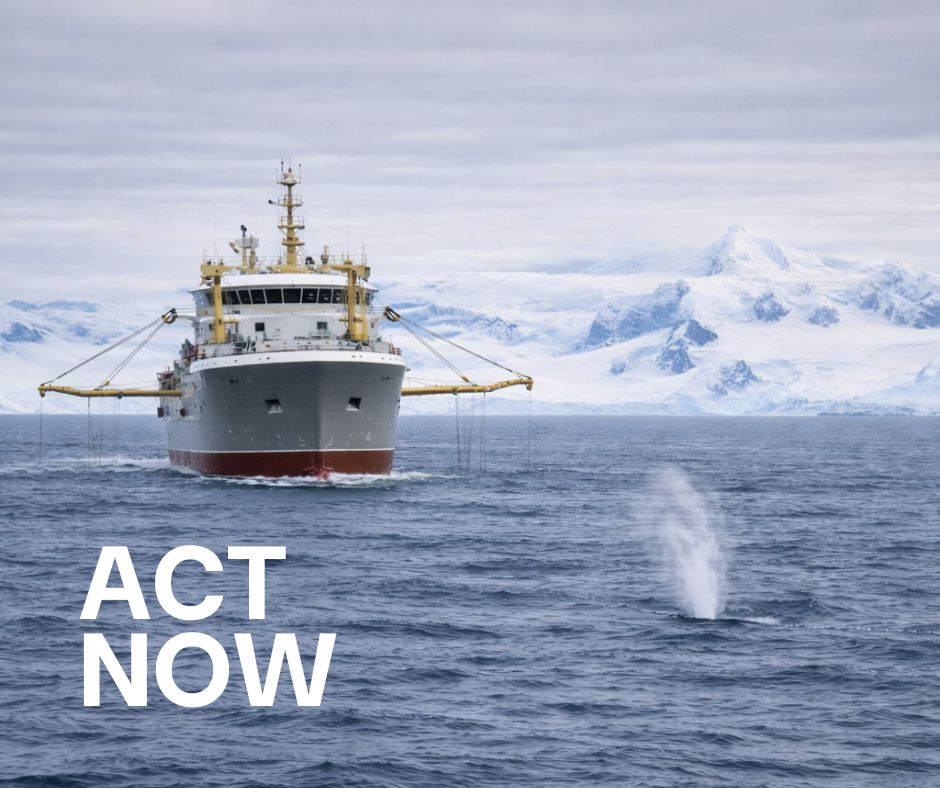
Krill are small and exclusively marine crustaceans that are found in all of the world's oceans. They are an important connection near the bottom of the food chain and a main source of food for many larger animals. They are being fished commercially in massive numbers and the impacts are profound. The global krill harvest amounts to 150,000 to 200,000 tonnes each year. Aker QRILL is the world’s largest krill killing company. In 2025, they removed from our oceans enough krill to feed 20 million penguins. Documents have revealed that the Marine Stewardship Council (MSC) is about to certify this company as “sustainable” – even though it takes vital food from penguins and whales to turn into health pills and pet food. The decision isn’t final yet. The rationale that the public doesn’t care about krill can be fought, and this petition gives us a way to do so and show people oppose this act of greenwashing.
+++++++
After the rallies, now what? Join others as they gather next Tuesday to discern the next steps following the Shoulder to Shoulder rallies.


with thanks to Claudia Zinck
Seeds, Stories, and Supper
Every writer goes through this. Grandma is certainly not alone.
You sit down at the computer and suddenly nothing sounds right. I have a whole article started about recycling, with examples from Nova Scotia and PEI. It’s full of facts and new information, … and it still sounds blah. Like I’m repeating myself. And if I feel that way reading it, why would anyone want to read it?
So, I ask myself: what’s interesting this week, Grandma? What’s happening in the green world that isn’t blah?
Well, Seed Share certainly isn’t blah.
Though if I talk about it endlessly it might become blah to everyone except me. So just a quick update: we’re now at about 1,800 seed packs, I’m picking up more seed this week, and we’ll be holding our second packing day on March 28th at 1 PM at the Blandford Community Centre. All welcome. Enough!
Now let’s move on to something that really got me thinking.
This week Grandma attended a World Women’s Day of Prayer service in Chester. It was a lovely gathering. The stories shared were about the lives of women in Nigeria, and even there, the environment had a role in the story.
We heard about widows banding together so they could grow enough food to feed their children. It was powerful. But the service materials only scratched the surface.
If you dig a little deeper, you discover that more than half of Nigeria’s agriculture is worked by women. Yet many of those same women are denied the legal right to own land. Cultural traditions mean the land belongs to men, while women do much of the work that feeds their families.
Women are also often the ones filling sandbags and planting trees to slow erosion. In waste management, the jobs that involve sorting garbage and handling plastics and toxic materials are overwhelmingly done by women. And because cooking is still done over open fires in many places, women suffer the most from smoke and charcoal-related illnesses.
There is a lot to learn there.
But Grandma tends to start close to home and then let the lessons travel outward.
Because women here in Nova Scotia and Atlantic Canada still face challenges too.
Yes, we can legally own land. Yes, we can work outside the home. In many ways we have opportunities Nigerian women are still fighting for. But that doesn’t mean everything is equal.
Take farming. Statistics say about 29.5% of farms are owned and operated by women in NS. But farms are often family businesses, and legal ownership may sit under the man’s name even when women do much of the work. If the numbers counted how many women work on farms, that percentage would be much higher.
Even in environmental and “green” jobs, women are often under-represented. Positions that require technical certifications or specialized training are still more frequently held by men.
And yet there is one place where women clearly show up in force: environmental volunteering. Studies often show women making up more than half of volunteers in environmental stewardship, sometimes between 54% and nearly 58%.
Of course, volunteering is often a family affair too. Dad shows up with the kids, and everyone helps. And that’s a wonderful thing!
Maybe that’s enough thinking for one week.
But attending that service made me pause. It made me read more, learn a little more, and then sit back and look at the bigger picture.
Nigeria is a long way from Nova Scotia. In parts of Nigeria, becoming a widow could mean facing starvation.
Yet here at home, places like Souls Harbour fill up every time a free meal is offered.
So maybe we aren’t as different as we think.
Sometimes the problems are the same, we just dress them differently.
And once you understand that, the next question becomes simple; what can we do about it?
Maybe it’s a family of five showing up to fill seed packets because they want their children to learn about helping their community.
Maybe it’s someone making quilts or buying socks for shelters.
Maybe its volunteers cooking in a kitchen so someone else has a warm meal that night.
We aren’t that different from Nigeria. We just happen to have a few more advantages right now.
And advantages, if you ask this Grandma, are meant to be shared.
Make Your Own Planting Pots
Everyone is itching to start seeds under grow lights or on sunny windowsills. Grandma understands the excitement, but she feels it might still be just a little too early. So instead of rushing the season, here’s a good project to keep those gardening hands busy.
Let’s make our own little planting pots from old newspapers or flyers.
It’s not only thrifty to make your own transplant pots, but also a wonderful way to reuse papers that might otherwise end up in the trash.
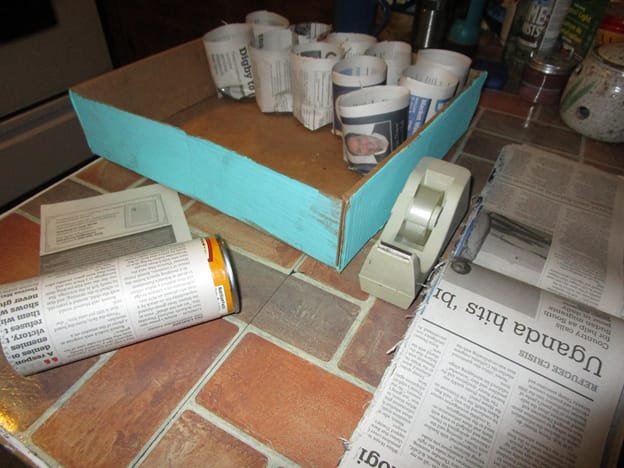
Start by separating the double newspaper sheets into single sheets, then cut each sheet in half. For each pot you’ll need two strips of paper and a 10-ounce soup can.
Wrap the two strips of newspaper around the can, leaving a little of the can showing at the top. Secure the edge with a small piece of tape. Then turn the can upside down and fold the extra paper at the bottom inward to form the base of your pot. Add another small piece of tape to hold the bottom together. Then gently slide the can out.
Now your little pot is ready to be filled with soil and seeds when the time comes.
When it’s time to transplant your seedlings, simply peel away the paper from the bottom and place the pot right into the ground. The newspaper will break down naturally as the plant grows, feeding the soil and keeping a little more paper out of the landfill.
And that, as Grandma likes to say, is a small bit of gardening that’s kind to both the plants and the planet.
Brilliant!
In Denmark, small floating islands are placed in harbours to create small habitats to support birds, bees and other habitats. It may be too rough to have these in our harbours but perhaps lakes, ponds, etc. What a way creates safe habitats!
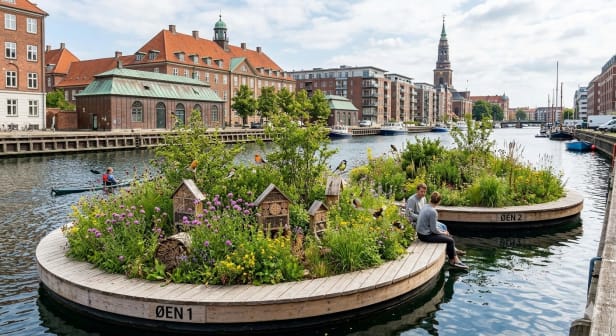
See it all at Denmark’s Floating Islands: Turning Urban Harbors into Havens for Bees and Birds - All Things Nordic
Something to Eat
This is far from a new idea, but when it surprised one person the other day, I thought maybe a few more folks hadn’t considered it.
We all love a good, boiled dinner with salt meat and plenty of root vegetables. But sometimes you look in the freezer and realize there isn’t any salt meat handy. That was my situation. There were some packages of pork stew meat and a couple of older pork chops waiting their turn to become supper.
Now, I won’t tell you it tastes exactly like salt meat, but it still made a very satisfying meal. I simply called it pork stew, borrowing the name from the butcher who had cut up those pork chops in the first place.
I started by browning the meat in a pan before adding it to the slow cooker. (And remember, if you use a roasting pot in the oven instead, that gentle heat can help warm the house on a cold day.)
Once the meat was in the pot, I added onions, carrots, turnip, potatoes, and cabbage. Then I poured in enough water to cover everything and let it cook slowly.
In a slow cooker, that’s about 6 hours on low or 4 hours on high. In the oven, a covered roaster at about 200°F for roughly 4 hours works nicely too. Just add extra water for the oven method.
Simple, hearty, and a good way to turn whatever pork happens to be in the freezer into a warm winter meal. That’s the kind of kitchen trick Grandma likes to share.
Enough for this week. Grandma has to fill cleaned margarine tubs and ice cream containers with seed. My home seed workers want more materials. Apparently sitting around a table after supper filling seed packets is relaxing. It lets the numbers rise to start filling boxes to be mailed or delivered to parishes in April.
Grandma is sending hugs

with thanks to the Rev. Lorraine Otto, our Water Advocate
Creator, we give you thanks for the gift of life sustaining water. Bless our streams, rivers, lakes, and oceans. Teach us to use water wisely and to share it justly so that all life may flourish.
Spirit of water, guide our hearts and hands and minds. Help us to protect waters' purity and to restore the lands that feed our rivers, lakes, and oceans. Let our actions honor your gift of water, preserving it for generations to come.
Lord of rain and hail and snow, we acknowledge that every living being has the right to clean, life giving water. Strengthen the hearts of those who advocate for equitable access. Awaken in our leaders the will and determination to provide clean accessible water for all our neighbors, near and far. Let compassion flow like a river to bring life and hope.
Tell us how you practice water conservation in your home or parish
or how you will celebrate World Water Day.