- DEN Enews
- Posts
- DEN Enews
DEN Enews
Transformative Seeds

Diocesan Environment Network
May 12, 2026
Did the word ‘seeds’ grab your attention? The gardeners among us are anxious to get our hands in the dirt and turn Mother Nature’s ingredients into a beautiful bounty. The latest Kairos newsletter has an article from Beth Lorimer which has inspired our newsletter this week. In "Seeds of Faithful Action", Beth speaks of the tension wondering what difference our choices make when large corporations and the wealthiest among us consume resources at a staggering scale. It can feel discouraging, even paralyzing. Why bother changing our habits when the problem feels so much bigger than us?
Our faith tells a different story.
We are not called to care for creation because it is easy or because it will lead to quick, measurable results. We are called because we are part of creation – not separate from it. The earth is not a backdrop to our lives; it is a sacred gift and we are in relationship with it. Like any relationship, it requires care, attention and love.
You can read the rest of Beth’s article here: https://kairoscanada.org/earth-day-seeds-of-faithful-action Her article concludes with transformation doesn’t begin with certainty. It begins when people gather, listen and take the first faithful step forward – together.
In Grandma’s words:
It begins with people who show up.
With communities willing to try.
With seeds, small, unassuming, and full of promise.
That is a hope for this newsletter, that we encourage each other, share our good news and our sad news and together move forward in transforming acts for creation.
Grandma has been regularly sharing updates on her Seed Share project and here is the latest one taken from this week’s article:
Seed Share Update - At the moment (May 4th) over five thousand packets of seeds have been packed. There are 4500 packets sent off and at least 900 more needed. The third seed tub has been filled and mixed. I think we started something here.
Read more in Grandma’s article below. Her Seed Share Project is a truly transformative and inspirational act for creation. Thank you Grandma!
Seem like that word transformation is catching onto a theme here.
The Season of Creation Symbol for 2026 is
Immersion in Living Water
The call is for transformation – that Christians would be immersed in the living water flowing from the throne of God- stepping in deeper and deeper, inspired by the Spirit of God, working together for the renewal of Creation.
Speaking of living water, here is the link to some rain barrel sales. Many sales close this Friday so be quick: https://rainbarrel.ca/

The following is a hopeful start to another transformative act:

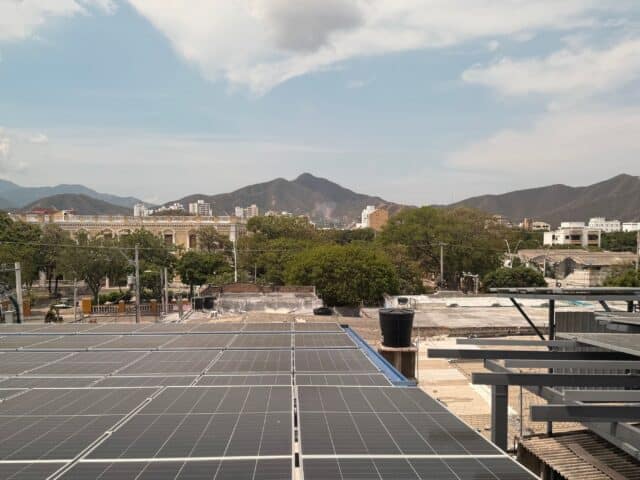
The First Conference on Transitioning Away from Fossil Fuels was held in Colombia at the end of April. It pointed to the difficulty of achieving this transition away from fossil fuels when the global economic system prevents governments from protecting public health and the environment. The conference made it clear the struggle against fossil fuels is understood as a much larger movement for global economic justice. Take a moment to read a quick summary report. Here is a quote from it we wanted to highlight:
"Assisted by investment treaties and investor-state dispute settlements, foreign corporations have been granted powerful rights to challenge public interest measures when they feel their profits — or even speculative profits — are affected. Communities facing environmental harm, displacement or threats to health from extractive industries enabled through foreign investments have no equivalent standing.
More than 2,500 international investment treaties, including several Canada has signed, allow corporations to bypass domestic courts and bring claims before private tribunals that operate with limited transparency and outside ordinary judicial safeguards, escaping virtually all public scrutiny."

with thanks to Eva Evans & Jesse Hamilton

Energy poverty affects nearly two million households across Canada. Improving energy efficiency is one of the most effective ways to permanently reduce these energy costs, while also increasing our energy productivity and contributing significantly to Canada’s emissions reduction. Just over 2 years ago, Canada was working with more than 100 nations to double the annual rate of global energy efficiency improvements. This direction leads to an economic output for every unit of energy consumed and with estimates of $4 to $7 in GDP for every $1 invested. Let’s call on our government to recognize energy efficiency as a national priority that reduces energy poverty and supports progress toward net-zero emissions.
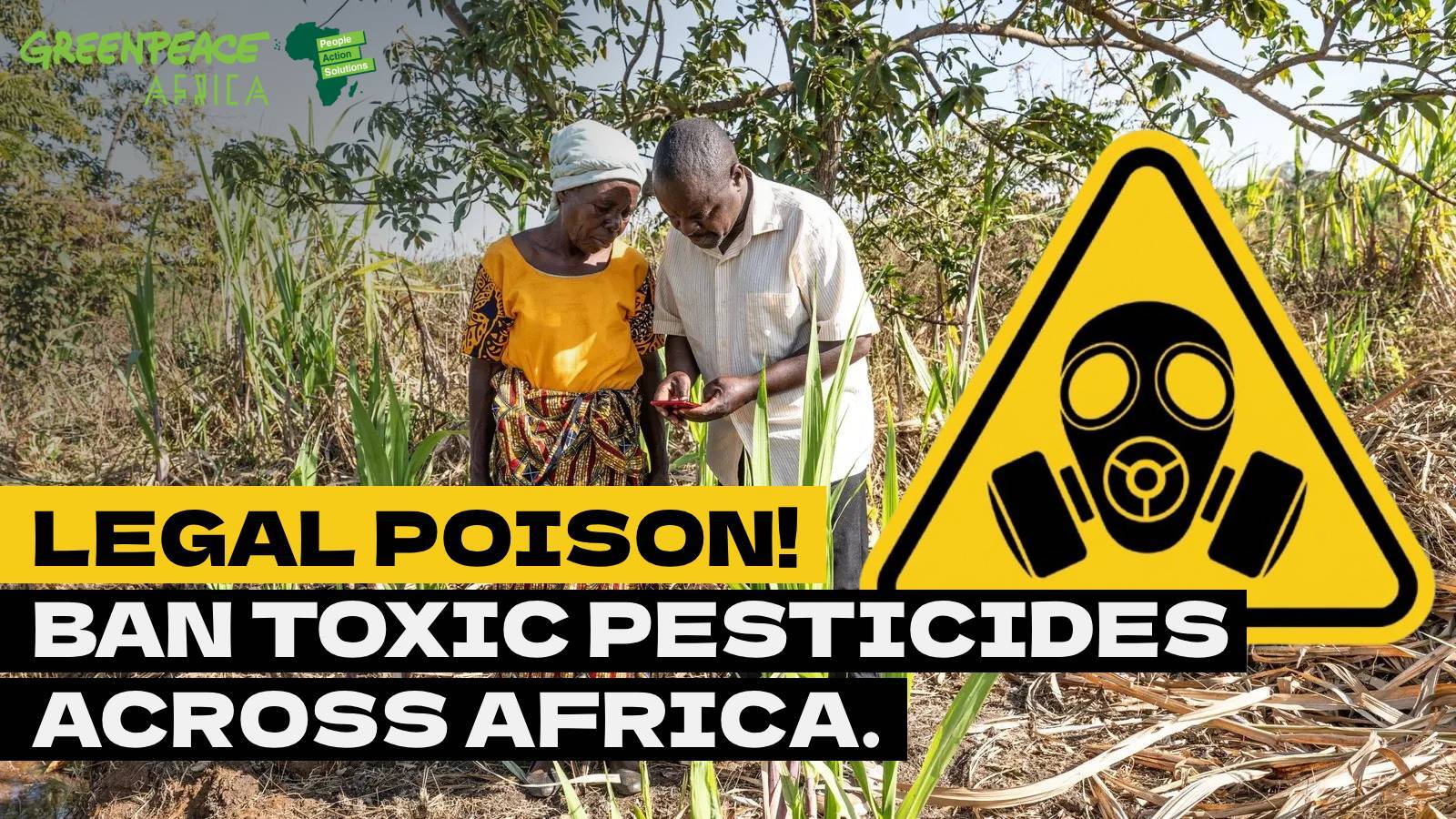
Toxic pesticides are being used widely across Africa, often with little or no oversight. In Kenya and South Africa alone, nearly half of all pesticides in use are classified as Highly Hazardous. The effects on human health and environment are devastating. Populations face respiratory illness, cancer, and reproductive issues, while nature experiences polluted rivers and lakes, contaminated and degraded soils, and declining pollinators. Commercial farm workers are ending up with permanent skin burns and life-altering disabilities from harvesting the food. Traces of these pesticide poisons can be found in the food eaten. People, land, and water are being poisoned in the name of profit. Add your voice to the petition to help end this silent environmental crisis by demanding African leaders ban the production, trade, and use of toxic pesticides across the continent.
Editor’s Note: Asking yourself why we should worry about pollution so far away? Runoff (from agriculture and sewage) from African rivers causes algal blooms and hypoxia (dead zones) in coastal waters. These zones can severely disrupt regional marine ecosystems that connect to the wider ocean, leading to habitat degradation. It’s akin to the metaphor of the butterfly flapping it’s wings and the wind changing miles away. We are all connected in this great big beautiful world.
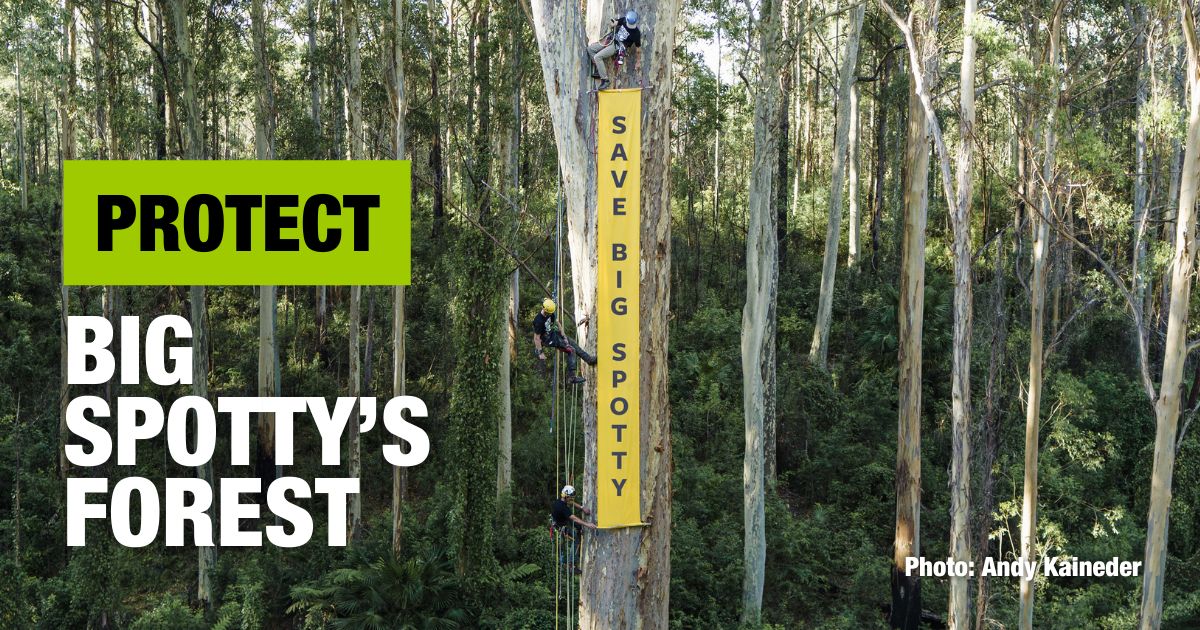
The world's tallest spotted gum tree is affectionately named ‘Big Spotty’. It stands more than 70 metres tall, is located in Australia, and believed to be 500 years old! It needs protection, and local organizations and communities have a plan. They demand that Big Spotty’s Forest be permanently protected from logging. There is a nearby state park which can be incorporated to form Big Spotty Flora Reserve. Visitor infrastructure, such as signage, a viewing boardwalk, and hiking trail, is proposed to give people a way to connect. This tree is irreplaceable and part of our world’s history. It comes with its own forest needed to maintain roots and microclimate. Canadians can add their name to help push for the goal of secure permanent protection.
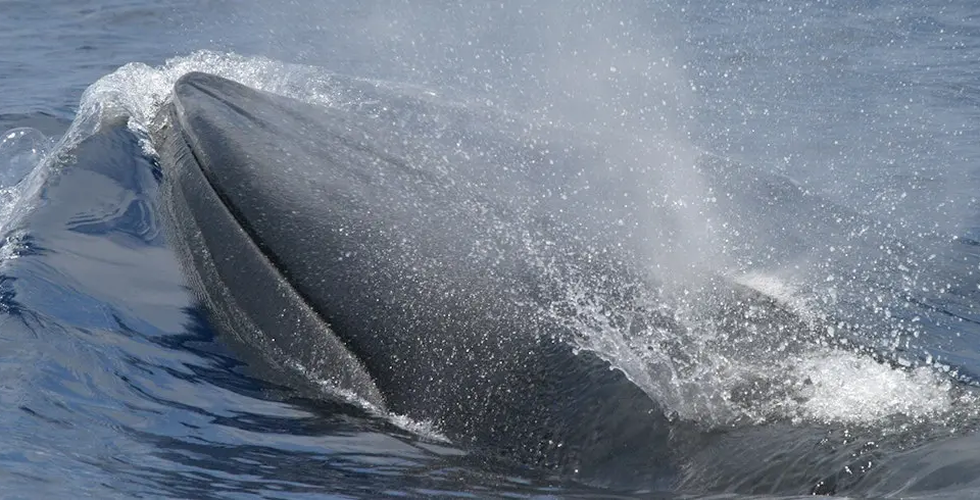
There are an estimated 51 Rice’s whales left in our world, but Trump has handed them a death sentence. These whales live in tight communities only in the Gulf of Mexico; an area already devastated by oil spills. A 2015 study showed oil from spills covered about 50% of Rice’s whales core habitat. Conservationists were fighting to provide a protected area, but instead the protections keeping them alive have been stripped away and Trump has opened the door to oil and gas drilling in their only home. As tensions with Iran escalate, the fears of energy instability are being used as justification. Oil and gas lobbyists are working to frame this as “energy security”, but this is about profit and the precedent is sets is dangerous. A rarely used federal panel, nicknamed the “God Squad”, caved to pressure and overrode the U.S. Endangered Species Act. This paves the way for drilling in one of the most fragile marine habitats on Earth. The Senate committee overseeing this decision still has the power to intervene and launch an emergency hearing to stop this dangerous roll back. Sign the petition to demand this happen before the last Rice’s whales are gone forever.

Churches - Two Choir Robes and a Handful of Seeds
When I was growing up, there were very clear lines drawn between denominations. We were Anglicans, full stop. It wasn’t that we thought poorly of anyone else… though, if I’m being honest, there may have been just a whisper of pride tucked in there. Still, we were raised to be respectful. Other churches were treated with courtesy, even if they weren’t quite “ours.”
I often think back to when our family moved to Petite Rivière in Lunenburg County. I was Anglican, properly so, on paper and in upbringing, but life has a way of gently rearranging things.
There was no Anglican minister in the immediate area at the time. Across the bridge and up the hill stood the United Church, near the two-story school where I attended Grade 6. My mother, practical as ever, had a simple rule:
“You go to church. I don’t care which one, but you go to church!”
So off I went with my new friends. I joined CGIT, sang in the United choir, and before long, that church became the center of my Sundays. It wasn’t complicated. It was simply where I belonged.
Then, as these things often happen, an Anglican minister arrived.
And just like that, the village expected me to return. After all, I was a documented Anglican. The trouble was that my friends were at the United Church. My choir was there. My whole Sunday world had settled there quite happily.
Now, my mother was firm, but she was also fair. After a bit of back-and-forth, we came to an agreement: I could keep all my United Church activities… as long as I attended Anglican services as well.
And so began what I can only describe as my double life in choir robes.
On any given Sunday morning, I would be at the United Church at 10:00, dressed in a purple choir gown, singing my heart out. The service would end just before eleven, and then, well, down the hill I would fly, tugging off that purple gown as I ran.
Into the back of the Anglican Church I’d slip, hastily putting on a black choir gown, catching my breath just in time to join the procession with what I hoped looked like dignity. There were even moments, oh yes, when someone would quietly whisk off my purple United Church hat and replace it with a proper black Anglican one, right there, mid-procession.
I must have been quite the sight.
When we eventually moved back home to Blandford, the first thing I asked was, “How many churches are there?” Only one.
Life became much simpler after that.
But oh, how the world has changed since those days.
Now, instead of standing apart, denominations are learning to stand together. I remember hearing about a community along the Eastern Shore where one minister served both an Anglican and a United congregation. Imagine that, something that would have seemed quite unlikely in my younger years.
And do you know where I see this spirit most clearly now? In the work we are doing for the environment.
Here in the Parish of Blandford, working alongside the local Baptist community feels less like crossing boundaries and more like visiting neighbours. Each spring, they look forward to our seed envelopes as though they were old friends returning. In turn, they welcome us to special gatherings, like the Women’s Day of Prayer, with warmth and generosity.
The United Church of Canada nearby has made good use of our Seed Share as well, whether for Seedy Saturdays or as simple giveaways at community events. Not long ago, I received an email from Prince Edward Island asking for more seeds for a United congregation there.
The Presbyterian community in PEI has also shown a keen interest. Of course, Grandma packed up a box and sent it along, because that’s what you do when someone asks to help something grow.
And then there are the community groups, no denominational labels at all, who simply reach out, asking for seeds and later sending back stories. Stories of children planting their first gardens. Of neighbours sharing harvests. Of small patches of land becoming places of beauty and purpose.
In New Glasgow, Nova Scotia’s first Bee City, our seed packets are being shared to support pollinators. A wedding venue and flower market in Cape Breton are scattering seeds far and wide. Even my own grandchildren have taken their turn at the kitchen table, helping fill packets and proudly carrying them off to friends.
It all begins so simply.
A table covered in envelopes.
Hands, the young and the old, working side by side.
A little laughter when seeds spill where they shouldn’t.
And yet, somehow, it becomes something more.
Across Nova Scotia, concerns about food security, rising costs, and the health of our environment can feel heavy if we try to carry them alone. But when people come together, when they begin with what they have, no matter how small, something rather wonderful happens.
Those small beginnings grow.
Seed by seed, packet by packet, communities are rediscovering the quiet strength of local growing. A garden in a backyard, a few containers on a front step, a shared plot behind a church, these become places of nourishment, not only for the body, but for the spirit as well.
When we grow even a little of our own food, we remember something important: we are not separate from the earth. We belong to it, and it to us.
In a world that often tells us problems must be met with grand solutions, there is comfort and truth in knowing that meaningful change usually begins quietly.
It begins with people who show up.
With communities willing to try.
With seeds, small, unassuming, and full of promise.
If you ever find yourself wondering what difference one person can make, think of this: every garden started, every packet shared, every flower planted for the bees is a step toward something better.
And that, dear friends, is how hope grows.
Seed Share Update - At the moment (May 4th) over five thousand packets of seeds have been packed. There are 4500 packets sent off and at least 900 more needed. The third seed tub has been filled and mixed. I think we started something here.
Gardening
If you are anything like me and find yourself delighted by a good bargain on blueberry bushes, do take a moment to look into the variety before you tuck them into the ground.
Grandma was positively tickled to bring home a few fine bushes from IG Farms; sixteen dollars apiece felt like a small victory. I had a spot all prepared the day before, and in they went, neat as you please. I stood back feeling rather proud of myself. It was just in time for the rain to come along and give me a quiet afternoon for a bit of research.
Well now.
The varieties I planted, Duke and Bonus, are not the modest little things I had imagined. These are bushes that like to stretch their arms, growing four to six feet high and about four feet wide. And as it turns out, they do not care to be crowded if you want a good harvest.
Which means Grandma will be out there again, shovel in hand, moving at least one bush to give it the proper space. I had them set about two, perhaps nearly three, feet apart, thinking more in terms of fitting in a tidy row than in what the plants truly needed. And wouldn’t you know, that close spacing can limit their berry production.
It’s a gentle reminder, really. In our eagerness, whether it’s a good deal or a sunny afternoon, we sometimes plant a little too quickly.
But gardens are forgiving places. A small adjustment now, and those bushes will settle in properly and reward the effort in due time.
And next time, Grandma will read first… and plant second.
Something to eat
Nana is having issues with chocolate these days so I have switched to no chocolate deserts. These bars are so good.
Carrot Cake Energy Bars
Recipe Grandma’s Translation
1 cup shredded carrots 1 small carrot peeled and shredded
1.5 cups rolled oats 2 small mugs rolled oats
½ cup peanut butter 4 big spoons of peanut butter
8-10 dates cut up small 2 slices of a date block, cut small
¼ cup of raisins 1 big handful of raisins
1 tsp of cinnamon a spoon of cinnamon
2 tblsp chia seeds 2 big spoons of chai seeds
2 tblsp coconut oil Same, could add more peanut butter
1 tsp vanilla same
Put dates in hot water for a few minutes and them spoon them smooth. Add everything else. Grandma prefers paper in the pan. Spoon mixture in and put in fridge for 2 hours. Cut and serve.

Gracious God, open our eyes that we may see the abundance of your creative love in all that surrounds and sustains us. Enable us to become people of hope and life, who plant the seeds of your earthly garden for the benefit of all. Help us to be gardeners and caregivers for the earth that is home for all life. Fill us with your gentle love, that we may walk tenderly on the earth, cooperating with your intention of abundant love and life. Amen.
What are your seeds of faithful action?