- DEN Enews
- Posts
- DEN Enews
DEN Enews
Listen & Hope

Diocesan Environment Network
August 04, 2026
I pray your summer has been enjoyable so far. Personally, I hate to see August arrive as it seems it is September in the blink of an eye. I am grateful for the rain and I pray your wells and rain barrels are full. Given our world on fire and disastrous environmental policies, this meme seemed timely. Oh, if we had only listened harder to David Suzuki and others in the 80’s and 90’s.

It seems appropriate to give the editorial over to a recent email from Laudato Si’:
This month, we pray for all those suffering from the heatwaves affecting Europe, and that, overcoming doubts and divisions, humanity may respond with unity and urgency to care for our common home.
Listening is the first step of ecological conversion. Before we change the world, we must learn to hear the cry of the earth and the cry of the poor—to recognize God's presence in every stream, every forest, every neighbor, and every community longing for justice, peace, and renewed hope.
As we prepare our hearts for the Season of Creation, may we rediscover that prayer is never an escape from the world's suffering. Rather, it opens our hearts to love more deeply and act more courageously, uniting every suffering to that of Christ. Every act of contemplation can become an act of conversion, and every prayer can become the beginning of love in action.
If listening is the first step towards ecological conversion, I hope you have had time to listen to the water this summer. Here are a few more words from Laudato Si’ to put you into thinking mode for the season of Creation:
Before rivers become statistics, they are songs.
Long before we measure rainfall, monitor droughts, or debate water policies, we encounter water as something deeply personal. The gentle rhythm of waves meeting the shore. Rain tapping softly against a window. A mountain stream winding through a forest. Children laughing as they splash through a river. The silence that follows when we simply sit beside flowing water.
Water has always spoken.
The question is whether we have learned how to listen.
This Season of Creation, centered on the theme Living Water, invites us to begin somewhere unexpected. Not with campaigns or activities. Not with solutions or strategies.
It begins with contemplation.
Before we can respond to creation’s cry, we first need to hear creation’s song.
Can you hear the Song of Creation? Read more here: https://laudatosimovement.org/news/hearing-creations-song-rediscovering-god-through-a-retreat-on-water/?
Celebrating the Feast of the Creator? Here is a trial Guide to the liturgies:
Begin the Season of Creation with this invitation from For the Love of All Creation and their online prayer service:
As we begin the 2026 Season of Creation, join For the Love of Creation for an online prayer service inspired by this year's theme, Living Water, and symbol, Immersion in Living Water. The theme draws on Ezekiel's vision of waters that bring healing, renewal, and abundant life for all creation.
Together, we'll pray for ecological justice, deepen our connection to God's creation, and renew our commitment to caring for our common home.
September 1, 2026 - 12:00 p.m. EDT
All are welcome. Register at https://us06web.zoom.us/meeting/register/qmVTxDPgRNyAq09LO-T3Og

with thanks to Jesse Hamilton & Eva Evans

www.taxfairness.ca/en/act/take-action/cut-costs-and-fight-climate-change-tax-windfall-profits-now
This summer, there have been devastating fires across our country that come with costs and harms that fall on community. This is playing out while Canada’s fossil fuel industry is in line for a projected $90 billion windfall. Much of this windfall comes directly from consumers in the form of higher gas prices. Climate change culprits make billions from a tax system that offloads environmental costs to the public and concentrates wealth at the top. In order to stop this profiteering and address affordability, we need to implement a windfall tax on the oil and gas industry. The excess profits being made could be transferred to Canadians and to investments in renewable energy. Use this petition to tell our government to cut the cost of living and fight climate change by taxing windfall profits now!

Proposed hyperscale AI data centres in Alberta are set to consume massive amounts of electricity and water, which increases pressure on power grids, freshwater supplies, and public infrastructure during drought, wildfire risk, and climate instability. Many facilities would rely on natural-gas generation that can significantly increase greenhouse gas emissions and undermine Canada’s climate commitments under the Paris Agreement and the Canadian Net-Zero Emissions Accountability Act. Communities are raising alarms regarding noise, air pollution, water consumption, inadequate consultation, threats to agriculture and ecosystems, and the transfer of infrastructure costs and environmental risks onto the public. Help Alberta fight this, and help the movement of Canadians saying NO to data centers grow by calling on the House of Commons to immediately impose a federal moratorium on the approval, construction, expansion, or operation of proposed hyperscale AI data centres in Alberta. This petition also asks to prohibit federate permits, tax incentives, funding, loans, water access, and other support. It asks to establish national environmental protections that prohibit hyperscale AI data centers. It also asks to provide mandatory federal environmental assessments, transparent public hearings, and free, prior, and informed consent from affected Indigenous nations and municipalities.
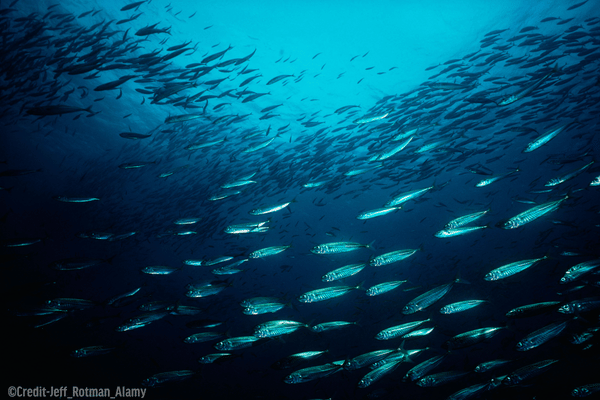
Add your name to tell Fisheries Minister Joanne Thompson that science-based guardrails, Indigenous Knowledge Systems, safeguards, and legal protection are needed for all 16 federally managed forage fish stocks. Right now, most forage fish stocks in Canada are considered unhealthy, and only three of 16 major forage fish stocks are protected under the Fisheries Act. Forage fish are the foundation of healthy ocean ecosystems. The small, fast-growing fish feed whales and seabirds, fuel coastal tourism, and sustain Canada’s most economically valuable fisheries. Their impact in the water is immense, and failing to protect forage fish threatens Canada’s ocean ecosystems. Protecting them is one of the most immediate and effective actions Fisheries and Oceans Canada can take to rebuild ocean abundance.
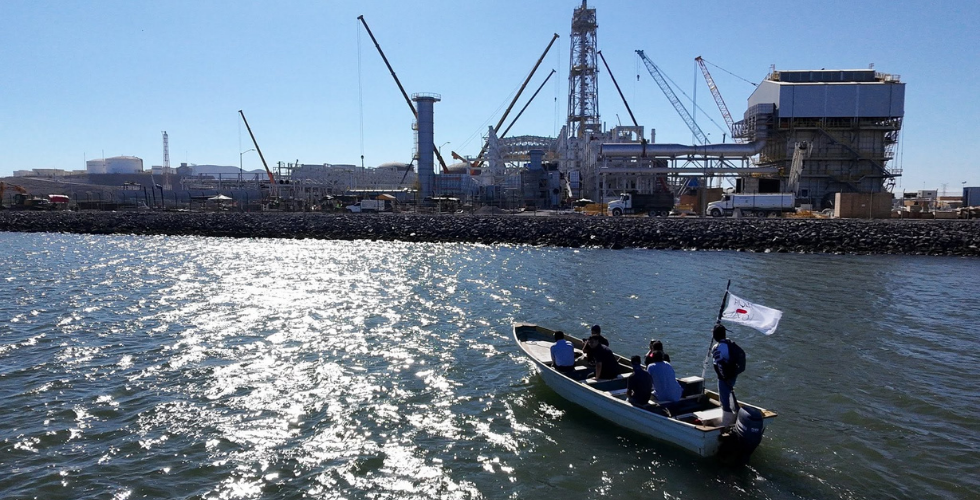
A German state-owned bank is financing the destruction of a UNESCO-protected paradise in Mexico. Ohuira Bay is located in the Gulf of California and is a wetland protected under international treaty. A paradise for migratory birds, green sea turtles, dolphins, fish, and crustaceans; this ecosystem sustains local livelihoods and the ancestral culture of the Mayo-Yoreme Indigenous people. An ammonia plant is being pushed aggressively without consultation to locals. Everyday people are camping outside the plant gates in a desperate, last-ditch effort to halt the final stages of construction. GPO is the company, and its own risk assessments reveal a high probability of major ammonia leaks that could instantly poison and kill anyone within a 15-kilometer radius. The German KfW IPEX-Bank has already poured $860 million into this toxic complex. Their policies explicitly forbid financing projects that involve environmental risks, threaten protected areas, or violate Indigenous rights. The project completely ignores the international standard of Free, Prior, and Informed Consent (FPIC) for Indigenous peoples, and it omits the international protection of the Ohuira Bay under international treaties. Please sign the petition to demand KfW IPEX-Bank be held accountable and stop its financing of this disaster.

with thanks to Claudia Zinck
Hope Grows Here
People often ask Grandma, "How do you stay hopeful when there is so much bad environmental news?"
The answer is simple.
I plant another seed.
I build another garden box.
I hand a child a packet of wildflower seeds.
Hope grows best when our hands are busy.
Hope isn't just something we talk about; it's something we cultivate.
Sometimes it is hard to get that conversation going
Grandma just wants to remind you, that all of you that are reading these words are “hope”. Without you, why bother to write.
Hope begins in our own backyard, figuratively and practically.
When Grandma was little, winter was such a time of hope.
We worked on things so we didn’t need to spend time on them in summer when we wanted to be outdoors. Every quilt minded or new hems or sometimes an old quilt put inside a new cover.
We dreamed of things round the kitchen table. Mom would hear from relatives that lived a few hours away and plans were tentatively made for a visit to the Valley or the Mountain to visit so and so “when the weather is good”.
We found new recipes to use that extra supply of rhubarb we canned.
We learned new crafts. New songs to sing. We cleaned out cupboards we haven’t seen since last year.
Winter wasn’t dull or boring; it just gave more time to dream.
Literally Hope takes root in back yard gardens when we preserve part of our food.
Grandma feels we need more like minded friends and neighbours. By doing things ourselves we encourage others without lectures.
When Hope takes actions, so much can be created for the good of everyone
A few years back we went to a learning workshop at a church where there were many small things laid out to learn, like how to repair a snag in a good sweater. Not rocket science but something I didn’t know.
There is a weekly version we call Heritage Handwork at our community centre. Go and just learn what other people are doing.
Hope blooms in a community flower garden where anyone can contribute flowers or seeds from their garden.
So Grandma thought of things in old cookbooks and wondered what a recipe for hope would be. See what you think of this
Grandma's Recipe for Hope
Ingredients
One handful of faith that tomorrow can be better.
Two generous cups of kindness.
A sprinkle of patience.
One packet of seeds.
A willingness to get your hands dirty.
A neighbour to share with.
A grateful heart.
As much laughter as you can gather.
Directions
Start where you are.
Use what you have.
Do what you can.
Plant a seed.
Feed a bird.
Pull a weed.
Share a tomato.
Wave to a stranger.
Smile at a child.
Offer a helping hand to someone who is struggling.
Repeat daily.
Don't expect hope to appear overnight. Like a garden, it grows quietly beneath the surface before anyone notices the first green shoot.
Serve generously.
The wonderful thing about hope is that, unlike cake, you never run out by sharing it. Every time you give some away, it seems to grow a little more.
Makes enough for a family, a neighbourhood... and perhaps even the world.
Let’s see what we can do DEN. Our network has such opportunity just waiting for us to use.
………………………………………………..
Something to Eat – Strawberry Freezer Jam
This is the time of year to make jam.
Grandma has a little story for you first.
Back on May 1st, I planted twenty-five strawberry plants that I bought from a family farm over in Hebbville. A week or two ago I noticed blossoms, then little green berries. I thought, "Well, maybe next year."
Imagine my surprise when I walked out this week and found beautiful, bright red strawberries waiting for me!
Not enough for a whole batch of cooked jam... but almost. Luckily I keep berries in the freezer.
Now, if you've never made jam before, don't let it scare you. The cooked version is easy enough, and the instructions are right inside the box of pectin. One little tip from Grandma, though—always check the best-before date. Pectin loses its strength as it gets older, and that's one ingredient you don't want to take chances with.
I've always believed it's a good idea to put a little food away for winter.
I grew up in a house with a root cellar. That cellar was expected to mainly feed the family through the winter months. Trips to the grocery store weren't something we did every week. You bought what you couldn't grow, preserve, or store yourself.
Life is different now. I do groceries every week, but it's almost become more of an outing than a necessity.
Still, I think there's something comforting about opening a jar or container of food that you put away yourself.
If you're just starting, freezer jam is a wonderful place to begin.
You'll need:
2 cups crushed strawberries
4 cups sugar
1 package of Certo or another brand of pectin
¾ cup water
Crush the strawberries with a potato masher or pastry cutter, then stir in the sugar and let it sit for about ten minutes. The berries become wonderfully juicy.
Meanwhile, combine the pectin and water in a small saucepan. Bring it to a rolling boil, stirring constantly, and let it boil for one minute.
Pour the hot pectin into the strawberries and stir for three to five minutes, until the sugar has dissolved.
Then spoon the jam into clean containers, leaving about half an inch at the top. Wipe the rims, put on the lids, and let the containers sit on the counter for twenty-four hours before refrigerating or freezing them.
Keep one container in the fridge to enjoy right away, and then tuck the rest into the freezer for winter.
And here's one last Grandma tip.
You don't have to buy fancy freezer containers. Keep an eye on the plastic tubs that food comes in. If they're food-safe and have a nice wide opening, wash them well and save them. They're perfect for freezer jam, and it's one more little way to reuse something instead of throwing it away.
There is something awfully satisfying about spreading homemade strawberry jam on a warm piece of toast in the middle of January... and remembering the sunshine that grew it.
……………………………..
A new item for the paper collection
Did anyone else see the printing on the sugar bags. Sure is recycle(able). After shaking my bag vigorously, I folded it and put it in my bag for paper items. One more thing out of the regular trash line.

Grandma is enjoying her summer break.
She needed it after her church being sold, the struggle to get the fog fences up and just life. It is marvelous how some things can melt away with sunshine and warmth.
Summer is finally relaxing Grandma and hopefully doing the same for you
We will be back in full swing come September.
Sending hugs

Eternal God,
whose Spirit moved over the face of the deep bringing forth light and life;
by that same Spirit, renew your creation, and restore your image in your people.
Turn us from careless tenants to faithful stewards,
that your threefold blessing of clean air, pure water and rich earth
may be the inheritance of everything that has the breath of life
and one generation may proclaim to another the wonder of your works;
through Jesus Christ, your living Word,
in whom the fullness of your glory is revealed.
Amen.
Rt Revd Libby Lane
Bishop of Derby
+++++++
PS - we began this edition with a mention of David Suzuki. We end it with a link to his most recent article, On love and legacy: Shifting baseline syndrome strikes home.
David discusses how Shifting baseline syndrome lays bare all the ways past generations failed future ones. It also reminds us that we can shift baselines in another direction.
May your August feel long, warm and joyful. See you in September. Remember, in the words of Maya Angelou,
“Hope and fear cannot occupy the same space. Invite one to stay.”
Thanks to Donna Giles, our resident photographer, for the reminder of this quote.