- DEN Enews
- Posts
- DEN Enews
DEN Enews
Let's Get Together

Diocesan Environment Network
January 27, 2026

Join us this Thursday at 7 pm on zoom to catch up with each other.
It's time to have a conversation and discuss how to support each other, continue to inspire parishioners, maintain the momentum, share information, and increase collaboration between parishes, faith communities, environmental organizations, and the communities we serve.
Please share the invitation with people in your faith community/region/diocesan council members. We look forward to those Epiphany moments during the conversation.
Blessings,
Marian

with thanks to Eva Evans & Jesse Hamilton
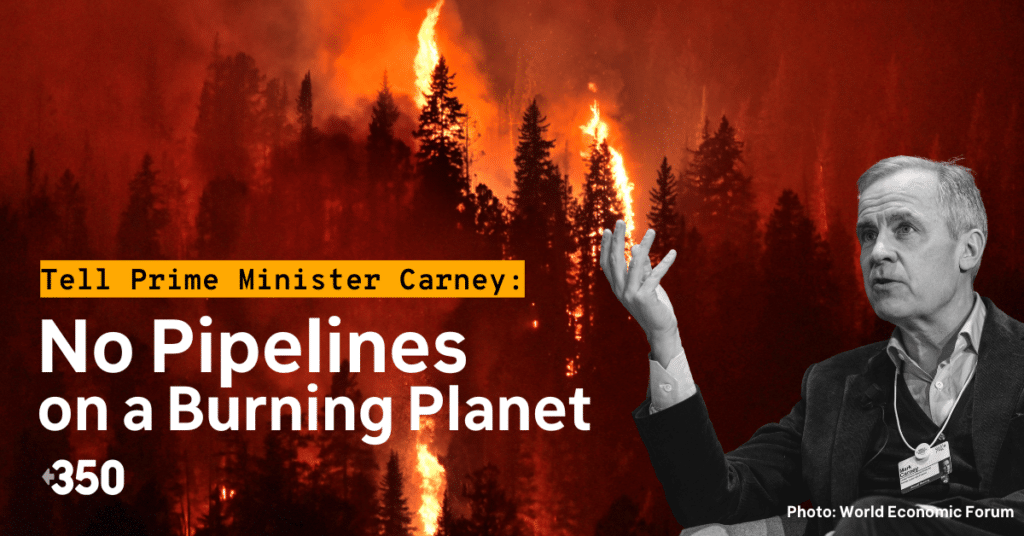
Asking our prime minister to:
1. Immediately freeze new oil, coal, and gas extraction in Canada and launch a plan to completely phase out the fossil fuel industry in line with science. That means no new pipelines that would endanger communities and ecosystems, and vastly expand one of the dirtiest sources of fossil fuels on earth: the Alberta tar sands.
2. Transition Canada to a 100% renewable energy economy. That includes funding a publicly owned East West Grid to power communities with affordable, reliable, renewable energy while uplifting Indigenous leadership and creating tens of thousands of good, green jobs.

The High Seas Treaty aims to protect two-thirds of the ocean that lie beyond national borders. It officially entered into force on January 17th, marking a new era in the protection of our shared ocean. 64% of the oceans can now be legally protected. 145 countries have signed the treaty and 83 countries have ratified this network of ocean sanctuary. Canada signed the treaty in 2024, but has yet to ratify it. A globally effective treaty depends on universal participation, and each ratification strengthens its legitimacy, expands cooperation, and increases our collective ability to protect marine life, create marine protected areas, and secure a healthier ocean for future generations. Let’s urge our leaders to ratify the treaty and make Canada a strong part of this exciting path forward! Make up your own message or copy mine: "To the Government of Canada: Please ratify the High Seas Treaty as soon as possible. It entered into force on January 17, 2026 but will be more powerful the more countries which ratify it. I am thankful Canada is one of the 145 countries to sign it but we now need to take the next step. Ratification will increase the world's ability to protect marine life, create High Seas marine protected areas, and secure a healthier ocean for future generations. Thank you."
High Production (and Destructive) Forestry in NS
There is no petition but please consider writing to Premier Tim Houston:[email protected], Honourable Kim Masland, Minister of Natural Resources: [email protected] and/or Honourable Timothy Halman, Minister of Environment and Climate Change: [email protected] regarding clearcutting and glyphosate spraying on Nova Scotia forests. Glyphosate spraying is not only harmful to all animals including humans but makes the forest more prone to wildfires as it targets hardwoods which are naturally more fire resistant. Thank you to those who made comments using the Harvest Plan Map Viewer (very difficult to use); that avenue is now closed but we can still email!
Part of the information Nina Newington gave us follows: DNR has posted a plan to clearcut inside the proposed Goldsmith Lake Wilderness Area. They intend to establish a High Production Forestry site of 31 ha just south of Gibson’s Lake, close to the Anglican Church Camp (St. Anne's Camp). High Production Forestry means clearcutting, planting, spraying, then doing it all again, over and over for as long as the land can stand up to the assault. DNR is planning to do this even though the Goldsmith Lake Wilderness Area has as high a conservation value as any area already protected in Nova Scotia. DNR has effectively blocked the Department of Environment and Climate Change from formally assessing the area for protection. Conservation scientists are clear that the value of an area for wildlife and for ecosystem health is much greater when that area is one large contiguous area. Fragmenting the area by driving roads into it and logging parcels within it reduces the conservation value of the whole. But that is what DNR is planning. The fact that the plan is for High Production Forestry (HPF) makes it that much worse. DNR claims to be prioritizing biodiversity on 90% of Crown land. The other 10% is a biodiversity sacrifice zone, i.e. High Production Forestry. Even DNR acknowledges the harm HPF causes and will continue to cause in perpetuity.

with thanks to Claudia Zinck
Water
I was recently sent a copy of Grandmother Birch’s newsletter, where she wrote about water and how many of us were trained to conserve it during drought years, and how some folks never quite broke the habit. There is certainly nothing wrong with finding ways to reduce our use of water.
But her words set Grandma thinking.
During that long drought, our well never ran dry.
It is a hand-dug well, placed where a water diviner found water on the property some 55 years ago. I remember my father coming to our tap to fill a barrel on the back of his wagon in spring so he could water the cabbage he grew for sauerkraut. When August arrived, he would pump salt water instead, as it helped keep bugs off the plants.
A couple of small springs feed into my well, but it is not drilled. So why didn’t it go dry?
Perhaps timing matters as much as technique.
Grandma does not have a dishwasher. I hand-wash and dry our dishes, which likely uses less water.
We shower as much as anyone else, usually early evening after supper chores, giving the well time to refill.
Laundry is done three or four nights a week, one load a night, right before I head to bed. Again, the well has the whole night to recover.
I clean as much as anyone else, and that uses water too. For bulky items like mats, I use a garbage can and a long-handled toilet plunger. That water gets poured onto the garden, though only three or four times a summer.
In summer, the dehumidifier’s water is emptied each morning onto the back garden. Leftover tea is cooled and poured onto the front flower beds. I know I could save water from boiling or rinsing vegetables, but I usually don’t, unless I’m already outside and it’s just as easy to pour it near a garden.
We water containers and raised beds with reused pop bottles fitted with drip spouts. Some of them have been in service for five years now. And yes, there is a fog fence on one garden. As good as they are, it wouldn’t have saved the well.
Grandmother Birch wrote, “Many years ago I learned out of necessity that if you carry all the water you require, over whatever distance seems long to you, your mind begins to think differently about it. Your plans change.”
Maybe that is why my well didn’t run dry.
Maybe my generation, raised in rural Nova Scotia, expected wells to falter in August and learned how to adjust. Maybe that is why as kids we went to a lake to swim on hot days instead of taking baths. Maybe that is why big spring and fall cleanings happened when rain was more reliable, when you knew the wells would refill.
Sometimes it isn’t about doing more. It’s about knowing when to do things, “ and letting nature catch up.
Knitted Mats
This is a fun, easy way to make sturdy mats, and a great project when you want something useful to come together fairly quickly.
First, you need fabric strips. For years, any clothing I no longer wanted went straight into my “mat bin.” When time allowed, I’d cut old T-shirts into strips—especially those free company shirts you never actually wear. At the end of each strip, cut a small hole. To join strips, thread the end of one strip through the hole in another, then loop the tail back through its own hole. Pull snug. Before you know it, you’ll have a long length of “fabric yarn.” Roll it into a ball just like regular yarn.
Using oversized knitting needles, cast on about 12 stitches. Knit back and forth in simple garter stitch, changing colours whenever the mood strikes. I knit each strip to a set length—about 22 inches works well. Once you’ve made several strips, sew them together side by side. For a neat finish, I crocheted two rows around the outside edge, and just like that, I had a mat.
The strips in the photos were wider or longer than I wanted. I’ll admit this first mat was a learning experience. I made plenty of mistakes, too big in spots, uneven seams, colours not quite planned; but that’s how learning works. The important thing is that I made one, I can already see how to improve the next, and it’s another solid green craft.
I originally made fabric strips like these for locker-hook mats using the gridded plastic canvas (the same kind used for latch-hook rugs), but that canvas has become nearly impossible to find. Knitting mats turned out to be much easier and just as satisfying. Jazz has claimed the first mat for an extra bed.
This is definitely a green craft: repurposing worn-out clothing, using up odds and ends of yarn when sewing strips together, and turning throwaway fabric into something useful. Grandma-approved, start to finish.

Something to Eat
This recipe may already be in your recipe box. It’s so simple that I’m not sure why I hadn’t tried it before, a three-ingredient peanut butter cookie.
You will need:
• 1 cup peanut butter
• 1 cup sugar (this is one recipe where it can’t be reduced or replaced)
• 1 egg
Mix everything together, scoop onto a baking sheet, flatten with a fork, and bake at 350°F for about 10 minutes. That’s it.
It makes a small batch, about 10 cookies for me, or closer to a dozen if you make them a bit smaller. So easy I can’t believe I waited this long to make them.
Till next week,
Grandma is sending hugs
Looking forward to seeing you Thursday night on Zoom!